The High-Performer’s Paradox: Why Non-Striving is the Key to Getting Where You Want to Go
Confessions of an anxious coach
Probably I shouldn’t admit this…
Lest a crack starts shattering my carefully constructed public persona as a can-do, confident coach for smart women. Lest I look any more fallible than the unfeeling LLMs people are using in lieu of human support nowadays.
The thing is, I’m okay. Fundamentally safe. Physically healthy. Objectively comfortable.
And yet. I’m anxious.
The Paradox No Striver Wants to Embrace: Non-Striving
Over the weekend, I hit pause on doom-scrolling and downloaded the audiobook Full Catastrophe Living by Jon Kabat-Zinn, PhD, whose soothing narration is a balm in and of itself.
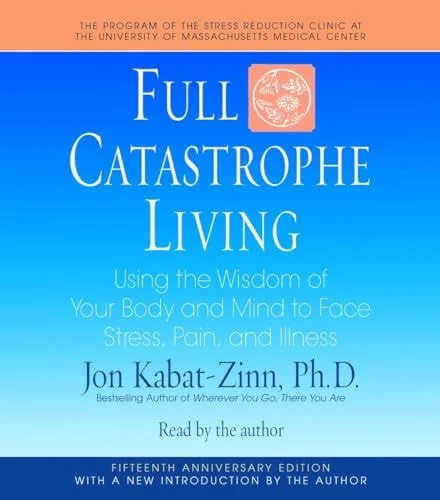
The title immediately appealed to me because it resonated with the catastrophizing tendencies of my monkey mind (and perhaps the collective experience of many people who share their moral outrage online).
The book teaches an ancient, proven technology that has served humanity through countless disasters and upheavals: Meditation.
In chapter one, Kabat-Zinn gently pointed me back to the thing I’d temporarily forgotten—despite a decade of preaching the same thing to high-performing anxious people: The healing paradox of non-striving.
The less you try to change your current inner experience, the faster you can actually do something about it.
The more you try to "fix" your emotions and beliefs, the stickier and trickier they get.
The Story of Grace
Even as I write this, my ego wants to pivot. It wants to stop talking about my own cracks and instead tell you a "success story" to prove I’m still a competent coach.

But the story of my past client, Grace, isn't actually a testimony to my coaching—it’s a testimony to the grace (oh, see what I did there?) of being present with your human self.
About two years ago, Grace reached out because she was delivering 120%, while her teammates locked in an average of 80%, but she was grossly underpaid as the only BIPOC woman at her workplace.
Grace is gifted, quick, and highly technical, but back then she was drowning in the "shame-ger" (shame + anger) of being undervalued by a biased workplace.
In the end, she did secure a pay raise, start her own company, and negotiate contracts that were multiples of her former salary. It was a whirlwind of change.
[You can listen to Grace tell her own story of going from minimum wage to CEO on this podcast interview.]
But when I sat down for tea with her last week, I didn't ask her about the money. I asked her what the key perspective shift was.
She told me it was learning to accept her emotions of feeling wronged and angry without needing to react, judge, or take immediate action. She learned to trust herself by learning to sit with herself, witnessing all her emotions and potential.
The external transformation was just a byproduct; the real "success" was self-acceptance.
It’s tempting to read stories like Grace’s and wish for a rapid transformation. But I want to be honest: that is often a mirage of the striver mind that quickly sours into downward spirals and anxiety attacks (ask me how I know).
Every so often, self-acceptance leads to radical change, and more often, self-acceptance leads to witnessing the moment-by-moment flow of your imperfect yet precious life—as messy and uncertain as it may seem for now.
The 90-Second Guest
You can’t get to where you want to go while escaping where you are now. And this paradoxical truth requires nothing of you right now other than noticing your breathing, the constant companion of your life.

Have 90 seconds? Try it now: Breathe deeply into your chest and belly. Allow your awareness to rest with the breath as it travels through your nostrils. Feel the rib cage expand then contract; notice the warmth of your exhale and the slight cool of your inhale.
Nothing to do. Just simply being.
Notice the breath and the emotion present alongside it. Imagine allowing that emotion to be exactly what it is in your body.
When I’m anxious, I like to imagine the greater part of me telling that anxious part, "You can be here as long as you need," as if it were an inconvenient but not unworthy houseguest.
And each time, I’ve noticed that this houseguest is a shapeshifter, like a whiff of cloud, not a permanent fixture.
For you, too: just being with the emotion as it arises, without needing it to be different and without needing you to be any different in this moment.
Perhaps moments like that are exactly what helps us navigate turbulent times. Through the formless, infinite, interconnected thread of humanity.